

Experience and Modern Rail Defect Detection Technologies: Efficiency of High-Speed Systems
Introduction
The reliability and safety of railway operations directly depend on the timely detection of rail defects. Ultrasonic testing has proven to be one of the most effective non-destructive testing methods. Today, a wide range of equipment is used for this purpose: from manual inspection trolleys to high-speed automated systems installed on locomotives and road-rail vehicles. Practical field experience, supported by many years of operation, along with modern technologies - particularly the OKOSCAN-73HS system - demonstrates that the optimal combination of inspection quality, mobility, and cost efficiency delivers maximum performance.
Inspection Quality
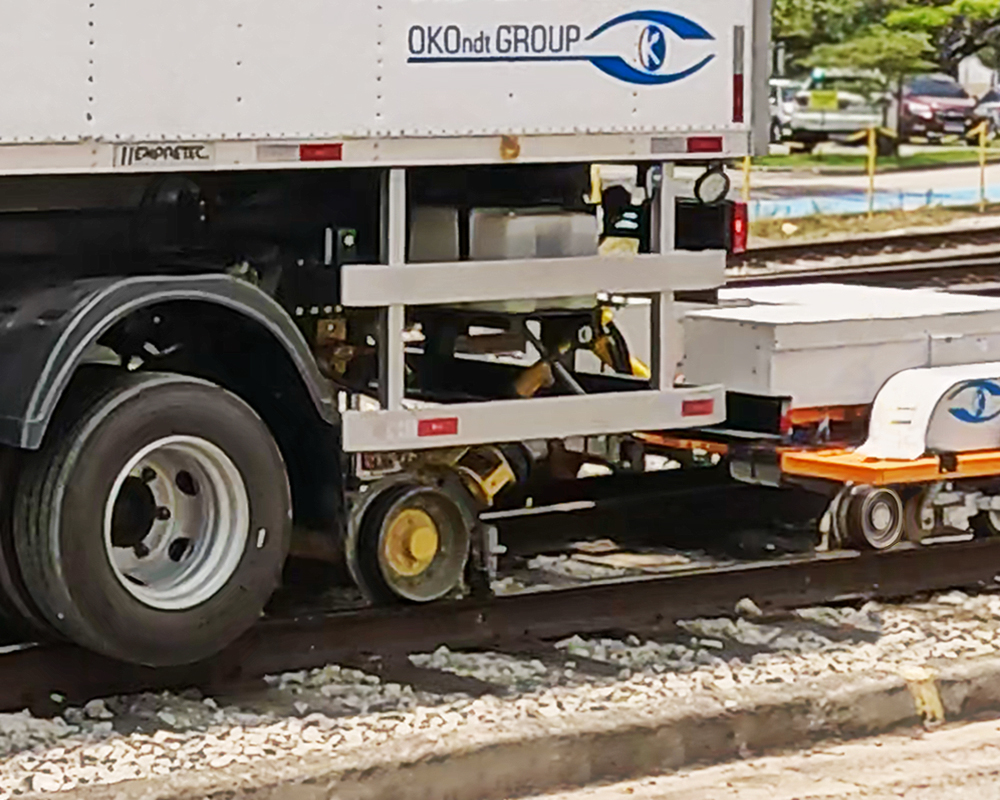
Field experience shows that the optimal inspection speed for ultrasonic rail testing is 30-40 km/h. The use of dual immersion wheels ensures rail scanning with a resolution of 1–4 mm, enabling reliable detection of all defects defined by EN 16729 and similar standards. In terms of flaw detection capability, such systems are comparable to manual inspection trolleys, while offering ten times higher productivity: up to 80 km/day versus an average of 8 km/day.
In comparison, locomotive-based inspection systems operating at speeds of 60-80 km/h have significant limitations. Reduced scanning frequency leads to missed small defects. The use of sliding probe blocks generates a high number of false indications, especially on worn or corrugated rails. As a result, additional verification is often required, significantly reducing overall inspection efficiency.
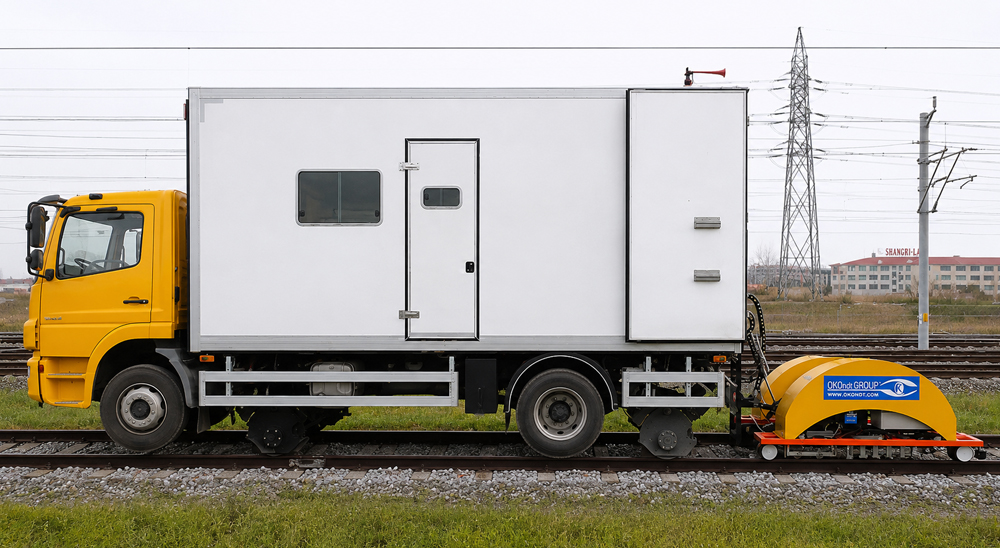
Road-rail vehicle-based inspection systems provide several key advantages in terms of mobility:
- the ability to enter and exit the track at any level crossing;
- no need for additional transport or personnel for traffic protection;
- the ability to quickly clear the track for passing trains;
- suitability for inspecting isolated track sections, such as metro lines not interconnected with the main network;
- maintenance and upgrades can be performed in standard workshops without dependence on railway depots.
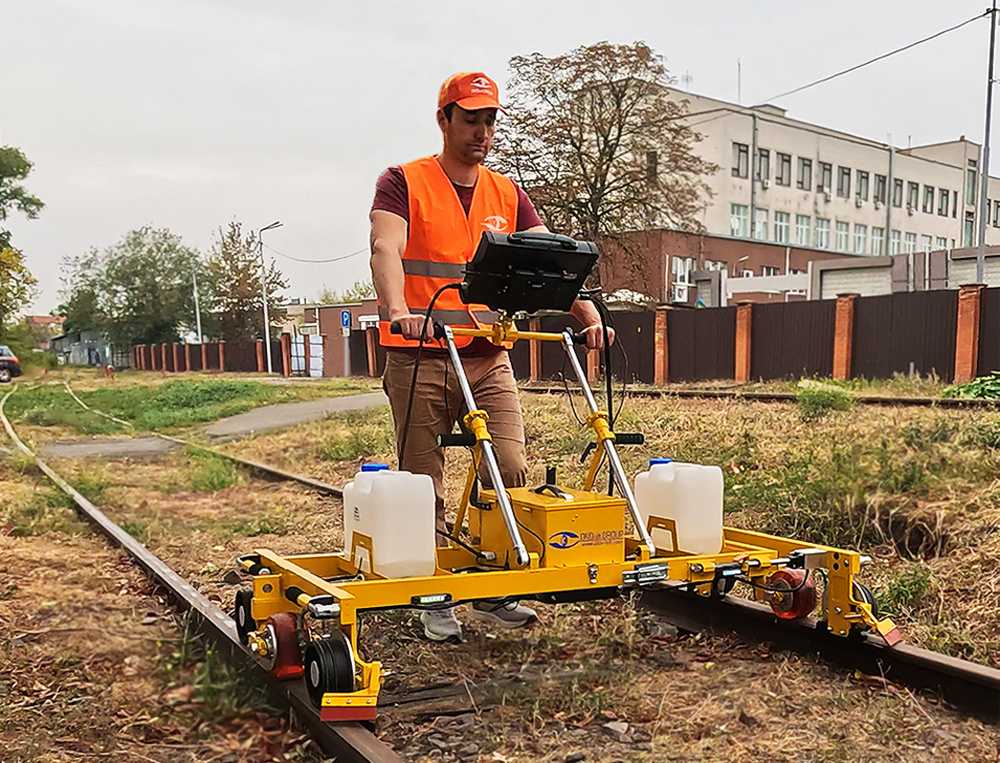
Manual trolleys require considerable effort for transportation and operation, while locomotive-based systems depend on available track infrastructure for maneuvering. Road-rail systems eliminate these limitations.
Economic Efficiency
A road-rail inspection system is approximately 15 times more expensive than a manual inspection trolley. At first glance, considering that inspection speed is only 10 times higher, deploying multiple trolleys may seem more cost-effective. However, when accounting for labor costs associated with a tenfold increase in personnel, it becomes clear that within the first year of operation, a road-rail system proves to be more economically efficient, generating greater long-term profitability.
Types of Defects and Capabilities of OKOSCAN-73HS
The OKOSCAN-73HS system is specifically designed for reliable detection of critical rail defects classified according to UIC 712 R, including:
- horizontal and vertical cracks in the rail head;
- fatigue cracks in welds and fillet areas;
- longitudinal defects (piping);
- shelling and head checking;
- transverse fatigue cracks;
- squats and foot corrosion;
- and others.
By combining different types of ultrasonic probes (straight beam and angle beam probes at 40° and 70°) along with eddy current testing sensors, the system enables early-stage detection of both internal and surface defects.
A more detailed analysis of defect formation, risk assessment, and detection capabilities using the OKOSCAN-73HS flaw detector system is provided in a separate article Rail Flaw Detection: Critical Defects Detected by OKOSCAN 73HS System.
Conclusion
Long-term operational experience confirms that road-rail vehicle-based inspection systems offer the best balance between inspection quality, mobility, and cost efficiency. The OKOSCAN-73HS system demonstrates the ability to:
- perform high-speed inspection without compromising detection performance;
- minimize false defect indications typical of locomotive-based systems;
- operate efficiently even on complex track sections;
- detect critical rail defects at an early stage of development.
Therefore, the implementation of modern road-rail ultrasonic testing systems represents a strategic step toward improving the safety and reliability of railway infrastructure.